
VOICES aims to develop a new account of the international minority protection system’s failure to secure linguistic rights of national minorities. It does so by analysing the impact of legal norms in the wider context of language planning. Traditional legal approaches to international law are unable to explain the deficiencies of minority protection regimes, which allows states to reinvent repressive policies in new forms without international condemnation. VOICES addresses these shortcomings by incorporating the insights of the language planning and language management fields of sociolinguistics into legal analysis. This approach allows evaluating legal norms by assessing how they affect language use in practice, breaking with formal legal approaches of textual compliance with international treaties.
VOICES will undertake in-depth country-level analysis of the state of language policy in Slovakia, a country with marked interethnic tensions and disputes over language policy, to demonstrate how international norms fail to secure linguistic rights of minorities. Taking into account the effects of legal norms on linguistic practice leads to more effective international protection and less restrictive language policy. It also promotes a less toxic public debate on minority rights, based on human rights standards that can take account of the practical needs of national minorities and the impact of policy on their rights.
The project’s interdisciplinary methodology based on assessing the impact of legal norms on linguistic practice will help establish the researcher as an expert in minority rights. It will open up excellent career perspectives for the researcher to set up an independent research group in Europe at the cross-section of law and linguistics to analyse international minority rights norms in a novel framework, through their impact on practice, and to develop an interdisciplinary critical enquiry into minority rights norms and policies on a European scale.
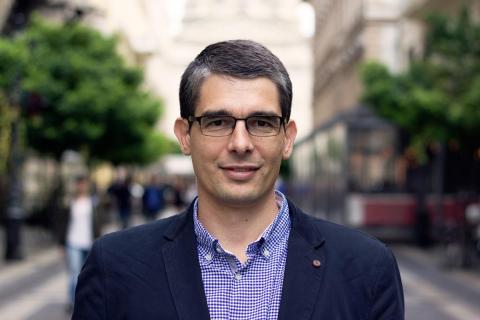
The project is implemented by Dr. János Fiala-Butora.
He is a graduate of Central European University (CEU) in Budapest, LL.M. ’04 and of Harvard Law School, LL.M. ’10 and S.J.D. ’16. His research focuses on international human rights law, particularly the rights of national minorities, rights of persons with disabilities, international litigation and ethnic conflicts. As a human rights lawyer, he actively consults with governments on their human rights laws and policies, advises a number of Council of Europe and UN bodies, and has brought landmark litigation before international tribunals such as the European Court of Human Rights, the UN Human Rights Committee, the European Committee of Social Rights, the UN Committee on the Right of Persons with Disabilities, and other UN and Council of Europe bodies on issues ranging from the right to vote, linguistic rights, the right to education, to freedom from ill-treatment, and others. In the past he served as the Executive Director of Minority Rights Group Europe (MRGE), Director of the Central Europe Program of the Harvard Law School Project on Disability (HPOD), and Executive Director of Validity Foundation (formerly the Mental Disability Advocacy Center – MDAC).